
Current News

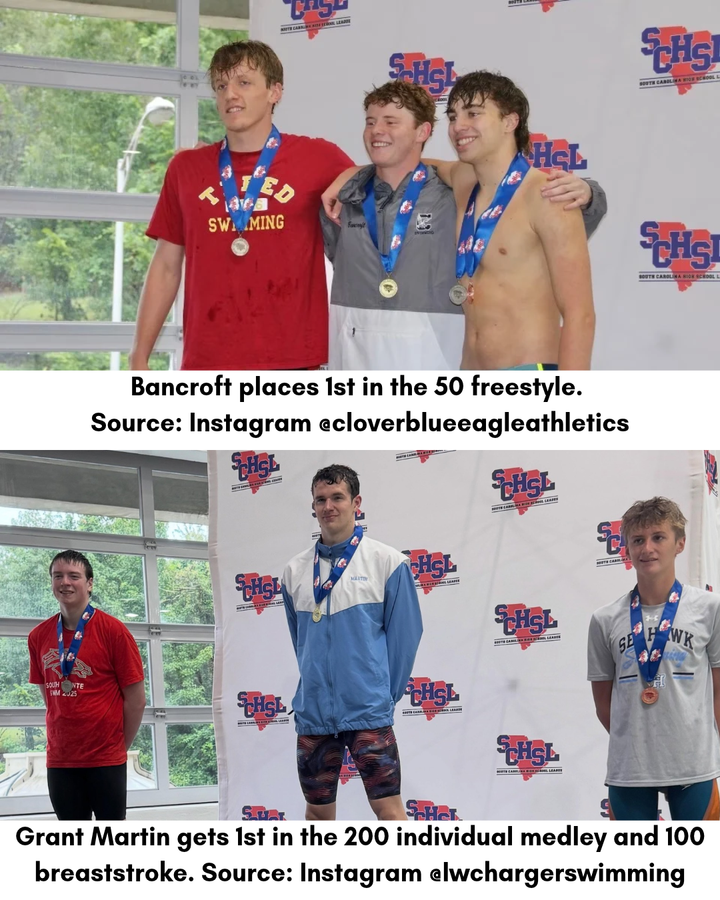
COLUMBIA, S.C.- Congratulations to Clover High School(CHS) swimmer John Bancroft on placing 1st in the 50 freestyle with a time of 21.23 seconds at the South Carolina AAAA Men’s State Championship on October 10. “The biggest thing I learned was that I need to trust my training”, Bancroft said. He shared how nervous he was going into the race, but it felt amazing to win and it meant a lot to have all his time spent training pay off. Lake Wylie High School(LWHS) swimmer Grant Martin placed 1st in the 200 individual medley and 100 breaststroke at the South Carolina AAAA Men’s State Championship. Congratulations to Martin for securing two wins for LWHS in their first ever swim season. Martin said that this was his first championship he had won and “it felt like that I was getting closer to my goals of competing at a collegiate and international level”. The boys team placed 5th overall, with a total of 218 points. The girls team placed 9th overall, with a total of 154 points. What a great season for the brand new LWHS Swim Team.
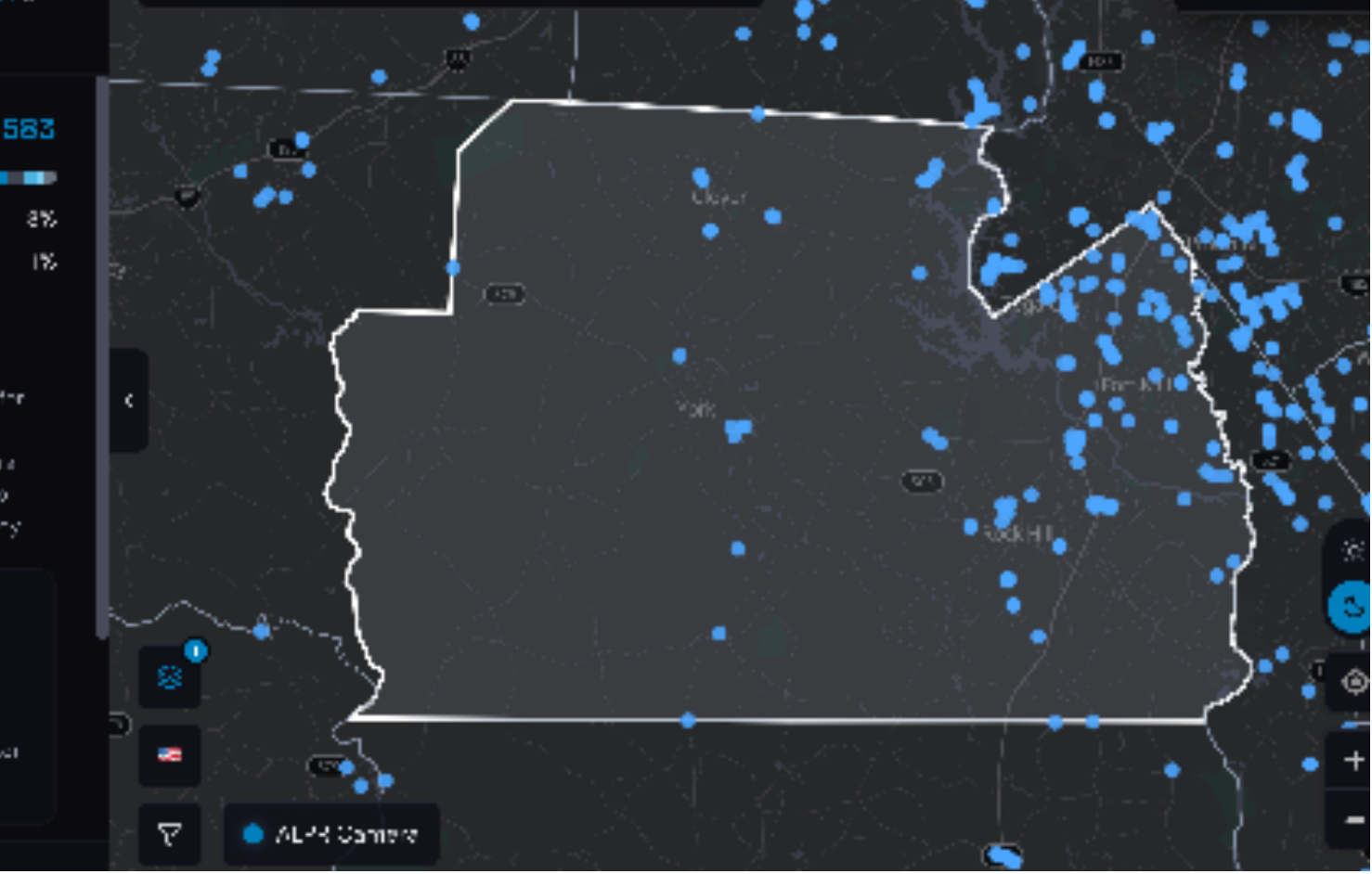
YORK COUNTY, S.C.- Law enforcement agencies brought Flock to the York County community in 2021. What started as the sheriff’s department purchasing seven Flock Safety cameras has turned into 45 cameras around our county. The Clover Police Department (CPD), specifically, has seven cameras and York County Sheriff’s Office (YCSO) has 19. Neighboring districts like Rock Hill and Fort Mill have upwards of 20 cameras. In an interview with York County District Two Representative Andrew Litten, he says, as of right now “the cameras are an asset more than a hindrance”. He stated several times that he trusts CPD and YCSO, but understands the importance of keeping the information gathered out of the wrong hands. The annual average daily traffic for Charlotte Highway is 36,700 vehicles according to the South Carolina Department of Transportation as reported by The Herald. Just on the stretch of Hwy. 274 outside of Crowders Creek Elementary, there are two Flock cameras pointing at either side of the road. With a minimum Flock reported mistake rate of 4%, an estimated nearly 1,500 mistakes a day are made just on that small stretch of road. When asked about this number, Litten responded that 4% was close enough to zero for his comfort. He added that his “opinion is subject to change” if they become a bigger problem. Since Oct. 2024, Will Freeman’s organization, DeFlock, has attracted a growing number of supporters. Their mission is to locate Flock cameras, educate citizens and unveil the negative impacts and secrets of Flock Safety. DeFlock York County, a branch of the organization from the area, started a petition on change.org on Aug. 12, 2026. The petition has 2,609 signatures at the time of publication. Every signature goes towards the organization’s mission to call for the removal of Flock cameras in the community. When asked how many signatures would be needed to actually raise an issue, Litten said that for it to become a real issue in the council there must be 10% of the voting public in the county. He also added that not every signature on a change.org petition can actually be trusted because signatures must be followed by a voting card. Deflock’s criticism of Flock cameras stems from concerns over misuse, errors and the invasion of privacy experienced by innocent civilians. For a recent example, Flock system error led to a police officer holding a Rock Hill man at gunpoint after the camera system falsely flagged him for driving a stolen vehicle. Litten suggested that errors like this are “human errors and not related to Flock itself and the AI”. When this argument was countered by asking “how do you rule out human error and how do you make this better” he replied that CPD and YCSO has “better guardrails, guidelines, policies and procedures” going into action. After reaching 2,000 signatures, the starters of the petition posted a message to the supporters. It read, “the message remains simple: We can support law enforcement and public safety while still demanding limits on mass surveillance. Residents deserve to know who can search this data, how it is being used, how long it is retained, what outside agencies can access it, how misuse is detected, and what happens with the enormous amount of information these systems collect about people who are not suspected of committing any crime”. Trent Faris, YCSO Public Relations officer, has responded to questions regarding the issue with “We do hope that once we have our website transparency page up and the transparency portal provided by Flock Safety, both will help dispel any concerns the public may have”. Recently, CPD has published a transparency portal that partially answers these concerns. To read more on this go to https://transparency.flocksafety.com/clover-sc-pd . Much of the information in the portal relies on the trust that officers and entire departments will not misuse the technology. Though this publication answers questions, as evidenced by the petition, the people of York County have a hard time trusting that any department will lawfully follow the prohibited uses. Additionally, the transparency page and portal that CPD and YCSO uses are provided by Flock Safety. To try to combat misuse, Flock forces logs to be kept on reasons for accessing the data. Problems arise when officers access data with vague justifications such as “follow-up” or “investigation”. There are people across many departments who are able to access and potentially this data. Some who have been affected by misuse report that they feel they cannot come forward because the offenders carry a badge and a gun and they worry about facing retribution for making a report. Across the country, concerns continue to rise. The county of Mooresville, N.C. has recently signed a contract with Flock to use their drones for surveillance in addition to the Automatic License Plate Readers. The Charlotte Observer reported in July that “A CMPD officer was arrested after being accused of using the Flock database to search the license plate of a person buying drugs from his friend in Boone to see if they were an undercover police officer”. Just a few states over, Florida’s Department of Transportation (FDOT) has banned the usage of Flock cameras on state-owned roads. FDOT has given law enforcement agencies 30 days to remove the Flock cameras and other ALPRs.
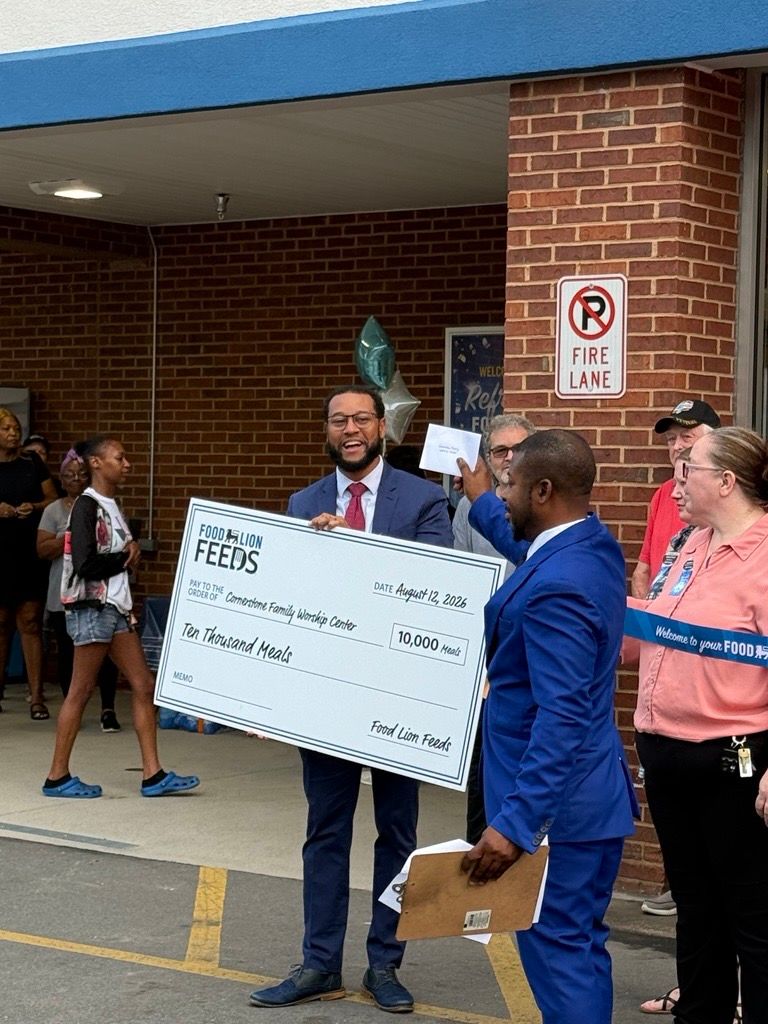
CLOVER S.C.- On Aug.12, Food Lion Clover held a ribbon cutting ceremony celebrating the series of renovations to the new store. Dozens of residents, Food Lion officials and Ahold Delhaize employees gathered around the front of the store to celebrate renovations and many charitable raffles and donations. “We wanted to make the produce visible to customers, we made it visible for customers”. Store Manager John Essel explained how every change or addition was made with the customer in mind. Essel reinforced that the changes were made based on customer feedback on surveys. Wider aisles were made for customers to shop comfortably next to each other and the floors were improved to make the shopping experience more pleasurable. “We don’t want the community to buy products to keep in the house for two days. We want them to be able to keep it for more than two days”. New produce misters now activate every fifteen minutes, keeping food fresher for longer. However, more than just the physical store was updated. Employees were given further training to better assist customers and to remove spoiled produce more frequently and attentively. Prior to the cutting of the ribbon, marking the official reopening, Food Lion gave out a total of $3,700 in Food Lion gift cards to the first 10 customers in line. The grand prize winner, Clover resident David Sorocco, arrived at 6:15 a.m. to secure a spot in line for the gift card drawing. “It’s nice, I get to choose what I want”. Sorocco, possibly inspired by the charitable events of the day, did not even think twice and plans to give half of his $1,000 to his friend, “We will both eat for the next couple of months.” During the conversation, another shopper stopped by and said “Buy yourself some steaks”. At the end of the ceremony, Essel presented Rev. Bradley Bien-Aime of the Corner Stone Family Worship Center in York with a check commensurate to 10,000 free meals to be gifted by Food Lion of Clover. “Without Food Lion Clover, we would really be less equipped to serve the community” Bien-Aime also mentioned how, besides feeding the community, their mission also reduces food waste for the community as they are able to accept food that is still good, but not able to be sold. “Meeting the physical needs, not just the spiritual means”. Bien-Aime briefly mentioned how they are a giving ministry, not a taking ministry, and how this large donation will be so important to the food pantry and to the community they serve. “What a shock, what a surprise, what a blessing”. This “blessing” will allow the food pantry to keep more supplies on hand. The partnership is going straight into the “mouths and stomachs of the less fortunate”. The large scale renovations and the charitable givings of the store will not affect the public’s wallets. The management was insistent about how prices will not be raised in response to this. “We are one of the lowest cost grocery stores in the US right now, everything is the same price as before” was Essel’s response to prices in the store.
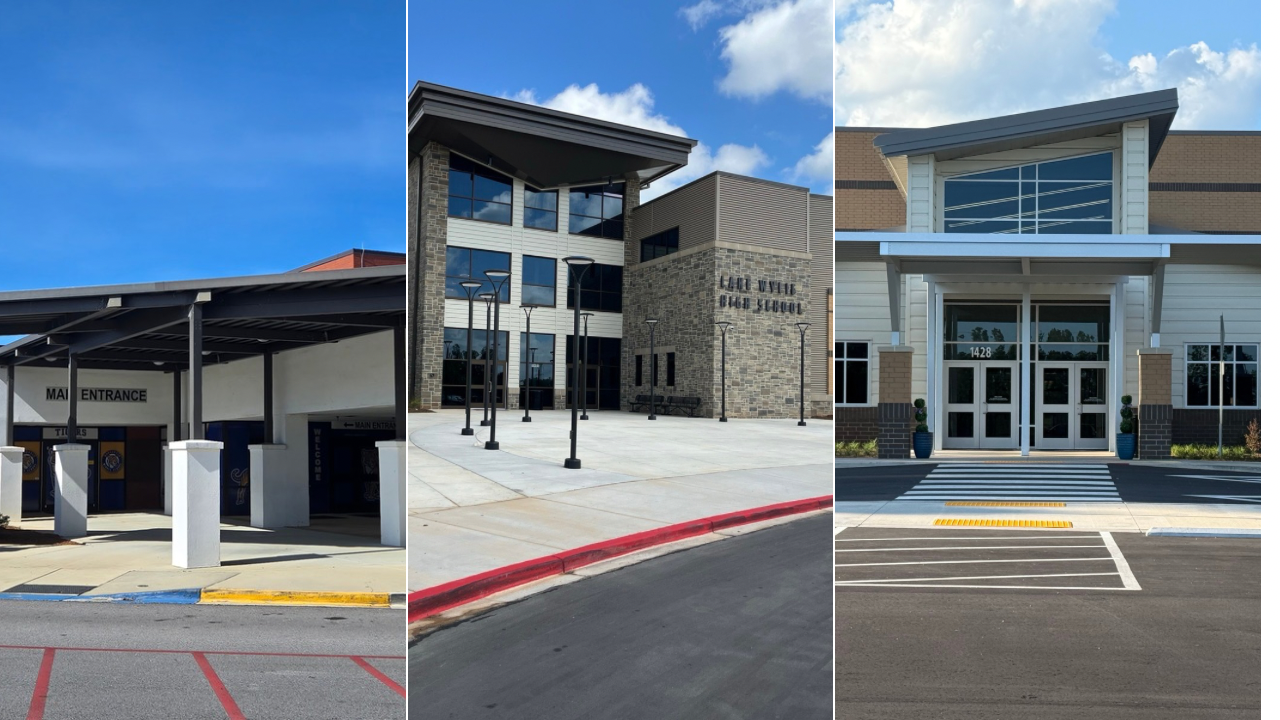
CLOVER, S.C.- The Clover School District began the school year with three new schools. The newly built Lake Wylie High School and Liberty Hill Elementary School on Cannon Ball Run stand alongside the renovated Ninth Grade Campus, which has become Roosevelt Middle School. The opening of the three schools reflects a major period of growth for the Clover School District. With the community continuing to expand, the district faced the challenge of creating additional space while ensuring students would have access to the same facilities and educational opportunities as Clover High School. The new buildings are not simply additions to the district, but a reflection of how much the Clover community has changed over the years. When asked about the experience of opening three schools in the same year, Dr. Sheila Quinn answered decisively: “we created the playbook”. Quinn discussed both the stress of the district’s “Friday meetings” and the excitement of having two separate high schools for the first time in many decades. The last time the district had 2 separate high schools was in 1970, the year the segregated Roosevelt High School was closed, the namesake of the new Roosevelt Middle School. On opening three new schools in only a year Dr. Quinn says, “I do not recommend that… but I am so proud of the hard work that our staff did to open three schools. It was a tough job”. District officials are so proud of the new construction, but are remaining very weary and apprehensive about the idea of opening three new schools in the same year in the future. “Our neighbors in Fort Mill are used to opening a school every year or every other year. We opened three in one year”. It is definitely an exciting year for the school district and historic in the way this may not happen again for CSD. Despite the new size of our district, one thing will never change in CSD’s eyes, their promise of “Each Child, Each Day…Excellence”.
Featured Articles
COLUMBIA, S.C.- Congratulations to Clover High School(CHS) swimmer John Bancroft on placing 1st in the 50 freestyle with a time of 21.23 seconds at the South Carolina AAAA Men’s State Championship on October 10. “The biggest thing I learned was that I need to trust my training”, Bancroft said. He shared how nervous he was going into the race, but it felt amazing to win and it meant a lot to have all his time spent training pay off. Lake Wylie High School(LWHS) swimmer Grant Martin placed 1st in the 200 individual medley and 100 breaststroke at the South Carolina AAAA Men’s State Championship. Congratulations to Martin for securing two wins for LWHS in their first ever swim season. Martin said that this was his first championship he had won and “it felt like that I was getting closer to my goals of competing at a collegiate and international level”. The boys team placed 5th overall, with a total of 218 points. The girls team placed 9th overall, with a total of 154 points. What a great season for the brand new LWHS Swim Team.
YORK COUNTY, S.C.- Law enforcement agencies brought Flock to the York County community in 2021. What started as the sheriff’s department purchasing seven Flock Safety cameras has turned into 45 cameras around our county. The Clover Police Department (CPD), specifically, has seven cameras and York County Sheriff’s Office (YCSO) has 19. Neighboring districts like Rock Hill and Fort Mill have upwards of 20 cameras. In an interview with York County District Two Representative Andrew Litten, he says, as of right now “the cameras are an asset more than a hindrance”. He stated several times that he trusts CPD and YCSO, but understands the importance of keeping the information gathered out of the wrong hands. The annual average daily traffic for Charlotte Highway is 36,700 vehicles according to the South Carolina Department of Transportation as reported by The Herald. Just on the stretch of Hwy. 274 outside of Crowders Creek Elementary, there are two Flock cameras pointing at either side of the road. With a minimum Flock reported mistake rate of 4%, an estimated nearly 1,500 mistakes a day are made just on that small stretch of road. When asked about this number, Litten responded that 4% was close enough to zero for his comfort. He added that his “opinion is subject to change” if they become a bigger problem. Since Oct. 2024, Will Freeman’s organization, DeFlock, has attracted a growing number of supporters. Their mission is to locate Flock cameras, educate citizens and unveil the negative impacts and secrets of Flock Safety. DeFlock York County, a branch of the organization from the area, started a petition on change.org on Aug. 12, 2026. The petition has 2,609 signatures at the time of publication. Every signature goes towards the organization’s mission to call for the removal of Flock cameras in the community. When asked how many signatures would be needed to actually raise an issue, Litten said that for it to become a real issue in the council there must be 10% of the voting public in the county. He also added that not every signature on a change.org petition can actually be trusted because signatures must be followed by a voting card. Deflock’s criticism of Flock cameras stems from concerns over misuse, errors and the invasion of privacy experienced by innocent civilians. For a recent example, Flock system error led to a police officer holding a Rock Hill man at gunpoint after the camera system falsely flagged him for driving a stolen vehicle. Litten suggested that errors like this are “human errors and not related to Flock itself and the AI”. When this argument was countered by asking “how do you rule out human error and how do you make this better” he replied that CPD and YCSO has “better guardrails, guidelines, policies and procedures” going into action. After reaching 2,000 signatures, the starters of the petition posted a message to the supporters. It read, “the message remains simple: We can support law enforcement and public safety while still demanding limits on mass surveillance. Residents deserve to know who can search this data, how it is being used, how long it is retained, what outside agencies can access it, how misuse is detected, and what happens with the enormous amount of information these systems collect about people who are not suspected of committing any crime”. Trent Faris, YCSO Public Relations officer, has responded to questions regarding the issue with “We do hope that once we have our website transparency page up and the transparency portal provided by Flock Safety, both will help dispel any concerns the public may have”. Recently, CPD has published a transparency portal that partially answers these concerns. To read more on this go to https://transparency.flocksafety.com/clover-sc-pd . Much of the information in the portal relies on the trust that officers and entire departments will not misuse the technology. Though this publication answers questions, as evidenced by the petition, the people of York County have a hard time trusting that any department will lawfully follow the prohibited uses. Additionally, the transparency page and portal that CPD and YCSO uses are provided by Flock Safety. To try to combat misuse, Flock forces logs to be kept on reasons for accessing the data. Problems arise when officers access data with vague justifications such as “follow-up” or “investigation”. There are people across many departments who are able to access and potentially this data. Some who have been affected by misuse report that they feel they cannot come forward because the offenders carry a badge and a gun and they worry about facing retribution for making a report. Across the country, concerns continue to rise. The county of Mooresville, N.C. has recently signed a contract with Flock to use their drones for surveillance in addition to the Automatic License Plate Readers. The Charlotte Observer reported in July that “A CMPD officer was arrested after being accused of using the Flock database to search the license plate of a person buying drugs from his friend in Boone to see if they were an undercover police officer”. Just a few states over, Florida’s Department of Transportation (FDOT) has banned the usage of Flock cameras on state-owned roads. FDOT has given law enforcement agencies 30 days to remove the Flock cameras and other ALPRs.
CLOVER, S.C.- The Clover School District began the school year with three new schools. The newly built Lake Wylie High School and Liberty Hill Elementary School on Cannon Ball Run stand alongside the renovated Ninth Grade Campus, which has become Roosevelt Middle School. The opening of the three schools reflects a major period of growth for the Clover School District. With the community continuing to expand, the district faced the challenge of creating additional space while ensuring students would have access to the same facilities and educational opportunities as Clover High School. The new buildings are not simply additions to the district, but a reflection of how much the Clover community has changed over the years. When asked about the experience of opening three schools in the same year, Dr. Sheila Quinn answered decisively: “we created the playbook”. Quinn discussed both the stress of the district’s “Friday meetings” and the excitement of having two separate high schools for the first time in many decades. The last time the district had 2 separate high schools was in 1970, the year the segregated Roosevelt High School was closed, the namesake of the new Roosevelt Middle School. On opening three new schools in only a year Dr. Quinn says, “I do not recommend that… but I am so proud of the hard work that our staff did to open three schools. It was a tough job”. District officials are so proud of the new construction, but are remaining very weary and apprehensive about the idea of opening three new schools in the same year in the future. “Our neighbors in Fort Mill are used to opening a school every year or every other year. We opened three in one year”. It is definitely an exciting year for the school district and historic in the way this may not happen again for CSD. Despite the new size of our district, one thing will never change in CSD’s eyes, their promise of “Each Child, Each Day…Excellence”.
Community
YORK COUNTY, S.C.- Law enforcement agencies brought Flock to the York County community in 2021. What started as the sheriff’s department purchasing seven Flock Safety cameras has turned into 45 cameras around our county. The Clover Police Department (CPD), specifically, has seven cameras and York County Sheriff’s Office (YCSO) has 19. Neighboring districts like Rock Hill and Fort Mill have upwards of 20 cameras. In an interview with York County District Two Representative Andrew Litten, he says, as of right now “the cameras are an asset more than a hindrance”. He stated several times that he trusts CPD and YCSO, but understands the importance of keeping the information gathered out of the wrong hands. The annual average daily traffic for Charlotte Highway is 36,700 vehicles according to the South Carolina Department of Transportation as reported by The Herald. Just on the stretch of Hwy. 274 outside of Crowders Creek Elementary, there are two Flock cameras pointing at either side of the road. With a minimum Flock reported mistake rate of 4%, an estimated nearly 1,500 mistakes a day are made just on that small stretch of road. When asked about this number, Litten responded that 4% was close enough to zero for his comfort. He added that his “opinion is subject to change” if they become a bigger problem. Since Oct. 2024, Will Freeman’s organization, DeFlock, has attracted a growing number of supporters. Their mission is to locate Flock cameras, educate citizens and unveil the negative impacts and secrets of Flock Safety. DeFlock York County, a branch of the organization from the area, started a petition on change.org on Aug. 12, 2026. The petition has 2,609 signatures at the time of publication. Every signature goes towards the organization’s mission to call for the removal of Flock cameras in the community. When asked how many signatures would be needed to actually raise an issue, Litten said that for it to become a real issue in the council there must be 10% of the voting public in the county. He also added that not every signature on a change.org petition can actually be trusted because signatures must be followed by a voting card. Deflock’s criticism of Flock cameras stems from concerns over misuse, errors and the invasion of privacy experienced by innocent civilians. For a recent example, Flock system error led to a police officer holding a Rock Hill man at gunpoint after the camera system falsely flagged him for driving a stolen vehicle. Litten suggested that errors like this are “human errors and not related to Flock itself and the AI”. When this argument was countered by asking “how do you rule out human error and how do you make this better” he replied that CPD and YCSO has “better guardrails, guidelines, policies and procedures” going into action. After reaching 2,000 signatures, the starters of the petition posted a message to the supporters. It read, “the message remains simple: We can support law enforcement and public safety while still demanding limits on mass surveillance. Residents deserve to know who can search this data, how it is being used, how long it is retained, what outside agencies can access it, how misuse is detected, and what happens with the enormous amount of information these systems collect about people who are not suspected of committing any crime”. Trent Faris, YCSO Public Relations officer, has responded to questions regarding the issue with “We do hope that once we have our website transparency page up and the transparency portal provided by Flock Safety, both will help dispel any concerns the public may have”. Recently, CPD has published a transparency portal that partially answers these concerns. To read more on this go to https://transparency.flocksafety.com/clover-sc-pd . Much of the information in the portal relies on the trust that officers and entire departments will not misuse the technology. Though this publication answers questions, as evidenced by the petition, the people of York County have a hard time trusting that any department will lawfully follow the prohibited uses. Additionally, the transparency page and portal that CPD and YCSO uses are provided by Flock Safety. To try to combat misuse, Flock forces logs to be kept on reasons for accessing the data. Problems arise when officers access data with vague justifications such as “follow-up” or “investigation”. There are people across many departments who are able to access and potentially this data. Some who have been affected by misuse report that they feel they cannot come forward because the offenders carry a badge and a gun and they worry about facing retribution for making a report. Across the country, concerns continue to rise. The county of Mooresville, N.C. has recently signed a contract with Flock to use their drones for surveillance in addition to the Automatic License Plate Readers. The Charlotte Observer reported in July that “A CMPD officer was arrested after being accused of using the Flock database to search the license plate of a person buying drugs from his friend in Boone to see if they were an undercover police officer”. Just a few states over, Florida’s Department of Transportation (FDOT) has banned the usage of Flock cameras on state-owned roads. FDOT has given law enforcement agencies 30 days to remove the Flock cameras and other ALPRs.
CLOVER S.C.- On Aug.12, Food Lion Clover held a ribbon cutting ceremony celebrating the series of renovations to the new store. Dozens of residents, Food Lion officials and Ahold Delhaize employees gathered around the front of the store to celebrate renovations and many charitable raffles and donations. “We wanted to make the produce visible to customers, we made it visible for customers”. Store Manager John Essel explained how every change or addition was made with the customer in mind. Essel reinforced that the changes were made based on customer feedback on surveys. Wider aisles were made for customers to shop comfortably next to each other and the floors were improved to make the shopping experience more pleasurable. “We don’t want the community to buy products to keep in the house for two days. We want them to be able to keep it for more than two days”. New produce misters now activate every fifteen minutes, keeping food fresher for longer. However, more than just the physical store was updated. Employees were given further training to better assist customers and to remove spoiled produce more frequently and attentively. Prior to the cutting of the ribbon, marking the official reopening, Food Lion gave out a total of $3,700 in Food Lion gift cards to the first 10 customers in line. The grand prize winner, Clover resident David Sorocco, arrived at 6:15 a.m. to secure a spot in line for the gift card drawing. “It’s nice, I get to choose what I want”. Sorocco, possibly inspired by the charitable events of the day, did not even think twice and plans to give half of his $1,000 to his friend, “We will both eat for the next couple of months.” During the conversation, another shopper stopped by and said “Buy yourself some steaks”. At the end of the ceremony, Essel presented Rev. Bradley Bien-Aime of the Corner Stone Family Worship Center in York with a check commensurate to 10,000 free meals to be gifted by Food Lion of Clover. “Without Food Lion Clover, we would really be less equipped to serve the community” Bien-Aime also mentioned how, besides feeding the community, their mission also reduces food waste for the community as they are able to accept food that is still good, but not able to be sold. “Meeting the physical needs, not just the spiritual means”. Bien-Aime briefly mentioned how they are a giving ministry, not a taking ministry, and how this large donation will be so important to the food pantry and to the community they serve. “What a shock, what a surprise, what a blessing”. This “blessing” will allow the food pantry to keep more supplies on hand. The partnership is going straight into the “mouths and stomachs of the less fortunate”. The large scale renovations and the charitable givings of the store will not affect the public’s wallets. The management was insistent about how prices will not be raised in response to this. “We are one of the lowest cost grocery stores in the US right now, everything is the same price as before” was Essel’s response to prices in the store.
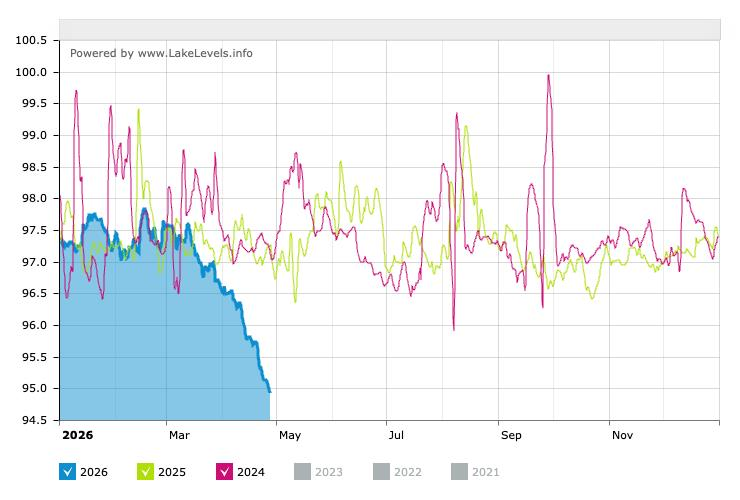
YORK COUNTY, S.C. — Clover has become the first municipality in York County to declare Stage 2 water restrictions as an ongoing drought continues to strain the region’s water supply. What’s Happening? The drought — the worst to hit the region in more than a decade — has pushed Lake Wylie water levels 15 to 17 inches below average, exposing submerged obstacles that many boaters don’t realize are closer to the surface than usual. The lower levels have triggered a spike in rescue calls and boat repairs as temperatures rise. Forecasters have not issued any significant rainfall outlook for the coming weeks, raising concerns that conditions will worsen heading into summer. As reported on WBTV, Catawba Riverkeeper Brandon Jones explained boat rescue calls have increased 40% since the drought began. Jones said water flow into Lake Wylie has dropped from more than 500 liters per day to about 150 liters as of April 20. He added that current water levels are the lowest the lake has seen in 80 years, with docks now sitting above the waterline. Without significant rainfall, levels may continue to drop. Effects of the Drought TowBoatUS reports a surge in calls as shallow water conditions create hazards across the lake. “We’ve had a huge influx of groundings and low water-related incidents here on the lakes as the water has been low,” said Logan Thomas, a captain with TowBoatUS. Boaters attempting to dock must now wade through shallow water on foot. Motorboat Mechanics on Lake Wylie has repaired dozens of damaged propellers in the past two weeks alone as exposed rocks, trees, stumps, and other debris increasingly cause hull and propeller damage. Repairs to damaged propellers and lower units can cost boat owners hundreds to thousands of dollars, and mechanics warn that repair timelines are growing as demand rises. The drought’s severity has forced officials to close boat ramps, including those at Allison Creek, as of early May. For now, the boat ramp at Buster Boyd Bridge remains open. The Lake Wylie Marine Commission is closely monitoring conditions and may take additional action if water levels continue to fall. Current Solutions Experts are currently encouraging boaters to plan careful routes, stay within marked channels, and consider towing coverage. TowBoatUS also has four boats out across the lake 24/7 and encourages calling them anytime anyone is on the lake boating. A big solution that York County Utilities has come up with is encouraging residents to reduce water usage. Although not mandatory and not restricting it, it is recommended that residents in York County volunteer to reduce water usage. This includes limiting watering to no more than two days per week, reducing washing down of sidewalks, walkways, driveways, parking lots, tennis courts, and other hard-surfaced areas, reducing washing down of buildings for purposes other than immediate fire protection, and reducing residential washing of vehicles. Use car washes that use recycled water instead of washing vehicles at home. This solution is made to protect the local water supply and limit the future use of other mandatory restrictions. The Catawba Wateree Drought Water Management Group plans meetings on May 16th. As of May 1st, water restrictions have been placed in Clover and York, and as of May 5th, Fort Mill has implemented water restrictions. Residents in Clover and Fort Mill will follow a fixed water schedule. Properties north of Highway 55 are only allowed to water on Wednesday and Sunday nights, while those south of the highway can water on Tuesday and Saturday nights. They are responsible for conserving water and meeting the goal of decreasing water usage by 15% of normal use. Only using the water for necessary usage, public safety, or maintaining regulatory compliance. While Fort Mill doesn’t follow a fixed schedule, they are encouraged to limit irrigation and watering during peak daytime hours. York and Clover's declaration of stage 2 to limit water will mean that residents will voluntarily limit their water use in their household, using only 300 gallons a day, as they enter stage 2 of the drought as of May 6th.
School
COLUMBIA, S.C.- Congratulations to Clover High School(CHS) swimmer John Bancroft on placing 1st in the 50 freestyle with a time of 21.23 seconds at the South Carolina AAAA Men’s State Championship on October 10. “The biggest thing I learned was that I need to trust my training”, Bancroft said. He shared how nervous he was going into the race, but it felt amazing to win and it meant a lot to have all his time spent training pay off. Lake Wylie High School(LWHS) swimmer Grant Martin placed 1st in the 200 individual medley and 100 breaststroke at the South Carolina AAAA Men’s State Championship. Congratulations to Martin for securing two wins for LWHS in their first ever swim season. Martin said that this was his first championship he had won and “it felt like that I was getting closer to my goals of competing at a collegiate and international level”. The boys team placed 5th overall, with a total of 218 points. The girls team placed 9th overall, with a total of 154 points. What a great season for the brand new LWHS Swim Team.
CLOVER, S.C.- The Clover School District began the school year with three new schools. The newly built Lake Wylie High School and Liberty Hill Elementary School on Cannon Ball Run stand alongside the renovated Ninth Grade Campus, which has become Roosevelt Middle School. The opening of the three schools reflects a major period of growth for the Clover School District. With the community continuing to expand, the district faced the challenge of creating additional space while ensuring students would have access to the same facilities and educational opportunities as Clover High School. The new buildings are not simply additions to the district, but a reflection of how much the Clover community has changed over the years. When asked about the experience of opening three schools in the same year, Dr. Sheila Quinn answered decisively: “we created the playbook”. Quinn discussed both the stress of the district’s “Friday meetings” and the excitement of having two separate high schools for the first time in many decades. The last time the district had 2 separate high schools was in 1970, the year the segregated Roosevelt High School was closed, the namesake of the new Roosevelt Middle School. On opening three new schools in only a year Dr. Quinn says, “I do not recommend that… but I am so proud of the hard work that our staff did to open three schools. It was a tough job”. District officials are so proud of the new construction, but are remaining very weary and apprehensive about the idea of opening three new schools in the same year in the future. “Our neighbors in Fort Mill are used to opening a school every year or every other year. We opened three in one year”. It is definitely an exciting year for the school district and historic in the way this may not happen again for CSD. Despite the new size of our district, one thing will never change in CSD’s eyes, their promise of “Each Child, Each Day…Excellence”.
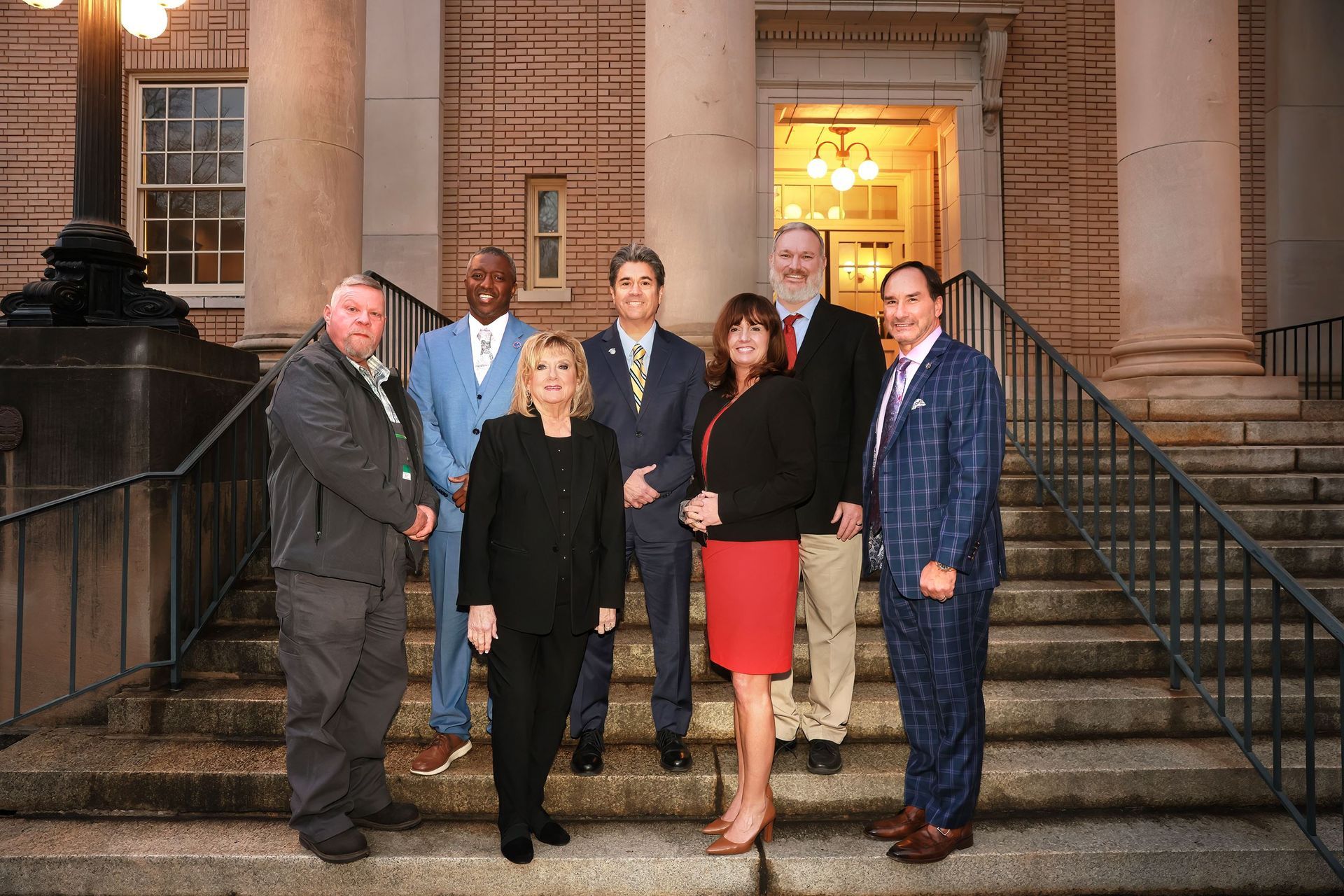
York County Council listens to D2 residents: Approves impact fees
Additional Columns